Steplly
How to Build a Daily Walking Habit
A daily walking habit does not need to start with a big goal. Learn how to make walking easier to repeat by starting small and fitting it into your routine.
How to Build a Daily Walking Habit
Starting to walk more is usually easier than making walking a regular part of your life.
You might feel motivated to walk every day at first, only to find that work, weather, travel, tiredness, or a busy schedule gets in the way.
That is normal.
A lasting walking habit is less about finding constant motivation and more about creating a routine that is easy to repeat.
You don't need to start with long walks or a demanding step target. Start with something manageable, connect it to your existing routine, and gradually make walking feel like a normal part of your day.
Start smaller than you think
One of the easiest mistakes is starting with a goal that requires a major change to your schedule.
If you rarely walk for exercise, deciding to walk for an hour every day may sound motivating on day one but become difficult to maintain later.
Instead, choose a small starting point.
For example:
- Walk for 10 minutes after lunch.
- Take a short walk after dinner.
- Walk around your neighborhood once a day.
- Take a brief movement break during work.
The first goal is not to become an expert walker. It is to make walking something you can repeat.
Choose a consistent time
A habit becomes easier to remember when it has a predictable place in your day.
You could walk:
- After breakfast.
- During your lunch break.
- Immediately after finishing work.
- After dinner.
- Before your evening routine.
There is no universally best time. The best time is the one that fits your schedule and gives you a realistic opportunity to follow through.
Connect walking to something you already do
You can make a new habit easier to remember by attaching it to an existing routine.
For example, instead of simply deciding to "walk more," create a specific sequence:
Finish lunch → put on your shoes → walk for 10 minutes.
Or:
Finish work → change clothes → take a short walk.
The existing habit becomes a reminder for the new one.
Make the first step easy
Small obstacles can make a habit surprisingly difficult.
If your walking shoes are buried in a cupboard, you need to find them before every walk. If your route requires driving somewhere, the extra preparation can become another reason to skip it.
Make walking easier by preparing in advance.
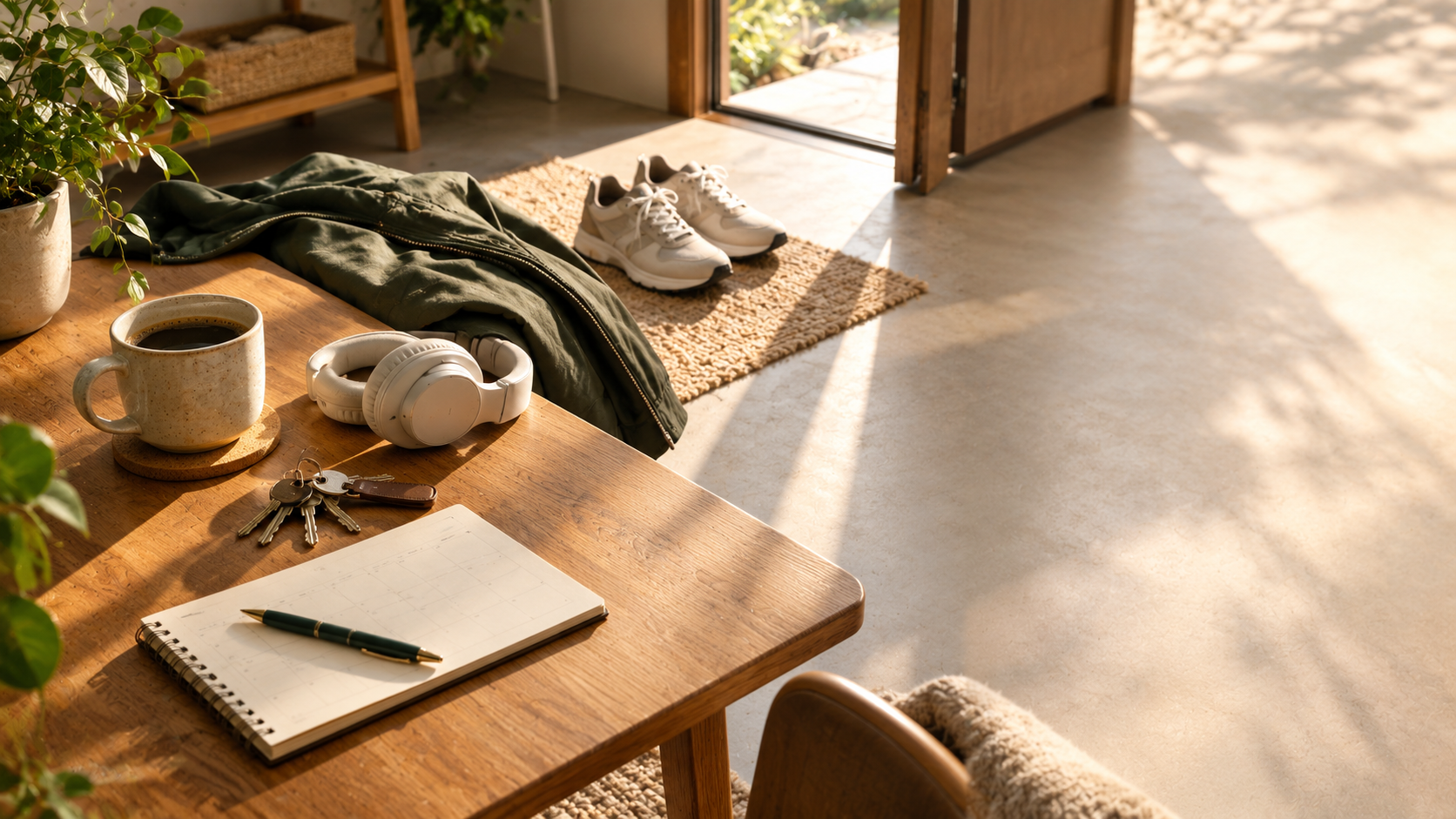
Keep comfortable shoes accessible. Choose a route close to home or work. Have a jacket available when weather changes. Decide where you will walk before the time comes.
The fewer decisions you need to make, the easier it can be to start.
Give yourself a simple goal
A goal gives your walking routine some structure.
Your goal could be based on time, frequency, or steps.
For example:
- Walk for 10 minutes every day.
- Take a short walk five days a week.
- Reach a personal daily step target.
- Add 1,000 steps to your current average.
Choose one approach that feels useful rather than trying to track everything at once.
If you use a step goal, remember that 10,000 steps is not a universal requirement. Your starting point and personal circumstances matter more than following a single number.
Focus on consistency, not perfection
A common reason walking habits fail is the idea that every day has to be perfect.
It doesn't.
You may have days when you walk much less than usual. You might be traveling, working late, feeling tired, or dealing with bad weather.
Missing one day does not erase your progress.
Instead of thinking, "I broke my routine, so I have to start again," simply return to your next opportunity to walk.
The ability to restart is part of building a sustainable habit.
Make walking enjoyable
Walking does not have to feel like a chore.
You can make it more enjoyable by:
- Listening to music.
- Listening to a podcast or audiobook.
- Walking with a friend.
- Exploring a different route.
- Visiting a park or quiet area.
- Using your walk as uninterrupted time away from your desk.
The more enjoyable the experience is, the easier it may be to look forward to repeating it.
Use your environment to your advantage
Your surroundings can create natural opportunities to walk.
A nearby café, park, shop, transit stop, or quiet street can become part of your routine.
You can also make small environmental changes. Park slightly farther away when practical. Choose stairs when appropriate. Walk to nearby errands instead of automatically driving.
These changes can make movement part of your normal day rather than something you have to schedule separately.
Track your progress without obsessing over it
Tracking can help you notice patterns.
You might discover that your step count is higher on days when you walk after lunch, or that your evening walk has become the most consistent part of your week.
With Steplly, you can track your steps, set personal goals, follow your progress, and take part in walking challenges.
The purpose of tracking is to give you useful feedback, not to make every day feel like a test.
If you want to understand how your step count translates into estimated walking distance and time, you can also use our steps-to-distance-and-time calculator.
Create a backup plan
Life will occasionally interfere with your normal walking routine.
Instead of treating this as a failure, create a smaller backup version of your habit.
If you normally walk for 30 minutes but have an unusually busy day, your backup might be a 10-minute walk.
If you normally walk outside but the weather is poor, find another safe way to move indoors.
A smaller version of the habit can help you maintain continuity when your normal plan is not possible.
Increase gradually
Once your walking routine feels comfortable, you can decide whether to increase it.
You could walk for a few more minutes, add another short walk, or gradually increase your daily step goal.
There is no need to increase everything at once.
Give your routine time to become comfortable before adding another challenge.
If walking causes pain or you have a health condition or mobility limitation, speak with a qualified healthcare professional about an appropriate activity level.
Build a routine you can keep
The most useful walking habit is not necessarily the longest one.
It is the routine that fits your life well enough that you can continue doing it.
Start small. Choose a predictable time. Connect walking to something you already do. Remove unnecessary obstacles. Track your progress if it helps. And when you miss a day, simply start again at the next opportunity.
The bottom line
Building a daily walking habit is less about motivation every morning and more about making walking easy to repeat.
You don't need a perfect routine or a perfect step count.
Start with a walk that fits your life today, then let the habit grow from there.
This article is for general informational purposes and is not medical advice. If you have a health condition, pain, mobility limitations, or concerns about increasing your activity, speak with a qualified healthcare professional about an appropriate level of activity.